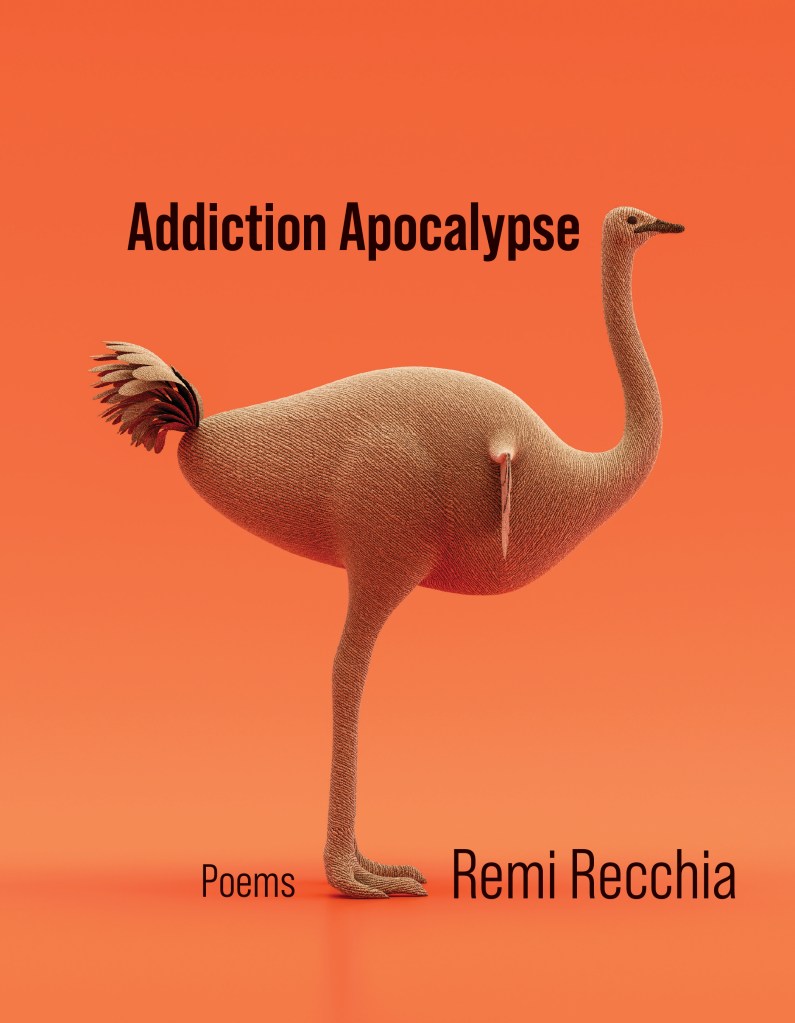
What is the line between myth and extinction?[…]What is the line between ownership and grace? In Remi Recchia’s Addiction Apocalypse, poems dance along these lines with lyric intensity and narrative grace. Funny and tender, proud and self-deprecating, this collection chronicles a life of transition, conviction, and addiction, one where every injection is a baptism, one that dwells in the everyday of Taco Bell, Mike Flanagan shows, rent debt, and 90-day chips, but also reaches for something more, shout(s) hallelujahs until my throat is sore. Recchia gives answer to the question “What happens when the apocalypse is churning in your own body?” The answer is that you survive.
—Donna Vorreyer, author of To Everything There Is
“We didn’t have the words,” says Remi, the trans speaker of “Dead Name,” the opening poem in Addiction Apocalypse. The word transition began as a noun of action, and this is a poetry in the act of finding the much-needed words to talk about the body, to talk about change and hardship, intimacy (“we are always talking”) and fulfillment. The Remi who speaks in these poems, having, as he says, “waited the dark,” articulates beautifully, with an often astonishing honesty, the arduous passage from waiting to action to realization.
—Nancy Eimers, author of Human Figures
In Remi Recchia’s Addiction Apocalypse, “transformation” is the vital force underpinning the speaker’s core humanity: transformed bodies, transformed minds, transformed relationships, and transformed worlds characterize the lived experience and rich sociocultural landscapes that populate these poems. Simultaneously urgent and playful, Recchia’s resonant lyricism stewards the reader on a journey through the complex layers of interrelated change: gender transition and familial loss, renewed spirituality and addiction crisis, mental illness and the whirlwind of new love intertwine. The speaker could try to pull them apart, to hold them separate from one another inside himself, but why would he? A triumph in transmasculine poetics, Addiction Apocalypse celebrates the messy, brilliant tapestry of a life lived in refusal of stagnation.
—Jacob Griffin Hall, author of Burial Machine
Addiction Apocalypse (Texas Review Press, 2026)
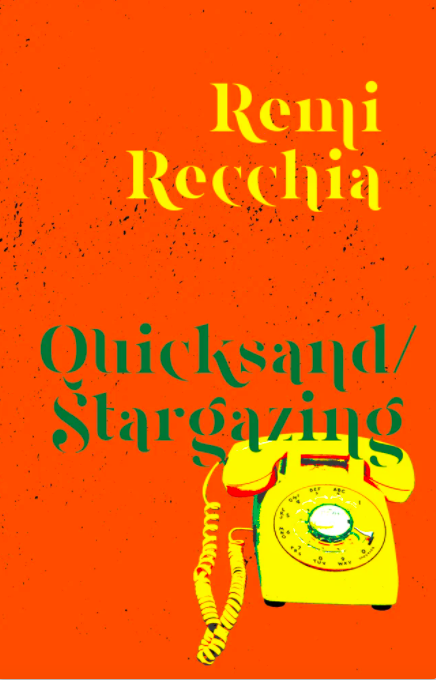
Remi Recchia’s poetry is both tender and darkly funny, deftly interspersing lines like “Did Christ/appraise his wounds for insurance?” along with “I don’t want/you to know we’re alone,/so let me be your star.” The poems in this book are intimate and personal, often chronicling and meditating on what life is like with a partner, that close bond like no other, while also exploring identity, gender, the aftermath of top surgery, exes, family, and navigating all of that in a complicated and ever changing world. This collection brought me joy reading it and just knowing it exists. I hope it does for all readers.
—Joanna C. Valente, author of A Love Story
These poems engage with what it means to be an authentic human-animal: to be endangered and empowered at once, to be “harsh and golden and brave,” to compassionately inhabit the complex space between the poles of this collection’s title. Quicksand/Stargazing amazes me with its range of forms and shapes, all woven through with a voice that is ecstatic, urgent, tender, and unflinching. This voice insists that it is still possible to seriously, honestly, unironically believe in love. “I am not embarrassed by most things” proclaims Remi Recchia, and how lucky that makes the readers of this brilliant and necessary book.
—F. Daniel Rzicznek, author of Nag Champa in the Rain
After four days in a tomb, the resurrected Lazarus must have known something about faith, transformation, and becoming a challenge to normative culture. In Quicksand/Stargazing, Remi Recchia offers up tender songs and precise guides to living and loving through the relentlessness of gender norms. Before using a public bathroom, “tell your wife where you are, how long you’ll be. Take your phone with you.” These poems remind us that the everyday is transformative—and that what’s transformative is both sweet and perilous: “If I stood, I know I would rise / like a Lazarus in the heat of certainty.”
—K. Lorraine Graham, The Rest Is Censored
 Remi Recchia